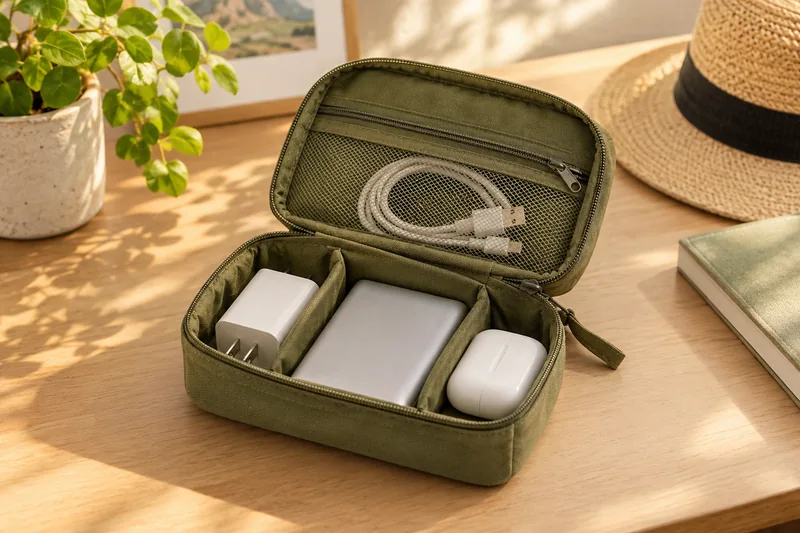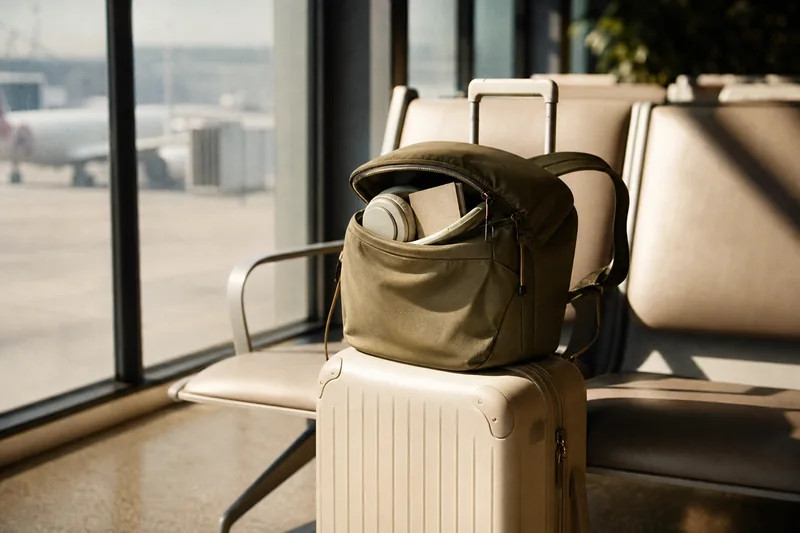
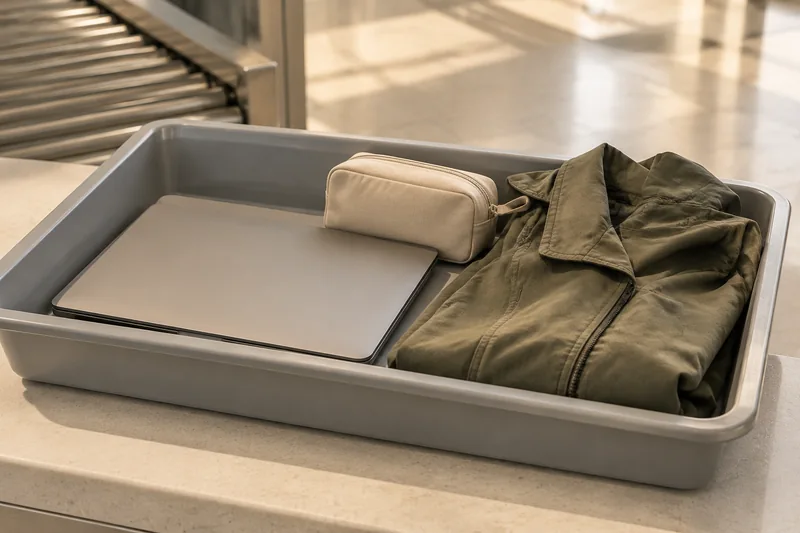
Preparing for security is mostly a matter of reducing the decisions you need to make in the queue. Know where your essential items are, check the airport’s current instructions and pack in a way that lets you respond without unloading your entire bag.
There is no single tray routine that applies at every airport. Scanner technology and local procedures can change whether you need to remove liquids or large electronics. Follow the actual instructions at the checkpoint rather than treating this guide as a reason to argue for a different process.
Check the airport before arranging the bag
Read the departure airport’s security information and check any connections or return airports. GOV.UK’s liquids guidance explicitly says rules vary by airport. It also lists products that count as liquids, including pastes, creams and gels.
Check unfamiliar or restricted objects individually using the appropriate official source. GOV.UK’s personal-items page is a starting point for UK travel, but a destination or airline may impose additional conditions. Do not assume that because an item is small it will be accepted.
Pack for access rather than display
Place the items that may need separate screening near an opening. A full clothing cube on top of a laptop can make access unnecessarily complicated. Keep liquids upright and protected against leaks while ensuring a required pouch can be retrieved easily.
Keep travel documents secure and available when required. Avoid repeatedly moving them between loose trays, pockets and bags without a deliberate place to return them. The same principle applies to keys and small everyday belongings: decide where they go before the queue reaches the equipment.
Check your electronics
GOV.UK advises charging electronic devices before travel. Its guidance says a device that does not switch on when requested will not be allowed onto the aircraft. Give yourself time to check essential devices rather than relying entirely on an airport charging point.
Use a protective arrangement that lets you take out the device if instructed. Keep battery and power-bank rules separate from ordinary screening preparation. The power-bank guide links to the FAA and airline checks relevant to those items.
At the checkpoint, observe first
Read the signage, listen to staff and use the instructions for that lane. You may be asked to leave some things inside the bag or to remove them. Do not make assumptions based on a previous airport visit.
If you need assistance or have essential medical equipment, contact the relevant airport or airline in advance where appropriate. Necessary personal items should not be omitted merely to make the security process simpler. Ask staff how the required screening will be handled.
Repack with a short check
After screening, move to the designated repacking area when available. Check that you have your documents, phone, devices, outerwear and all separate pouches before leaving. Close zips deliberately rather than walking away with half-open luggage.
Use a consistent pocket for the things needed next. Boarding documents and journey essentials should not disappear beneath the clothes simply because the bag has been rearranged. If staff inspected a container, check its closure before returning it beside fabric.
A useful routine is easy to repeat: verify the local rules, pack accessibly, follow staff instructions and check the complete set of belongings afterwards. That is more dependable than a rigid “security hack” promising the same result at every airport.