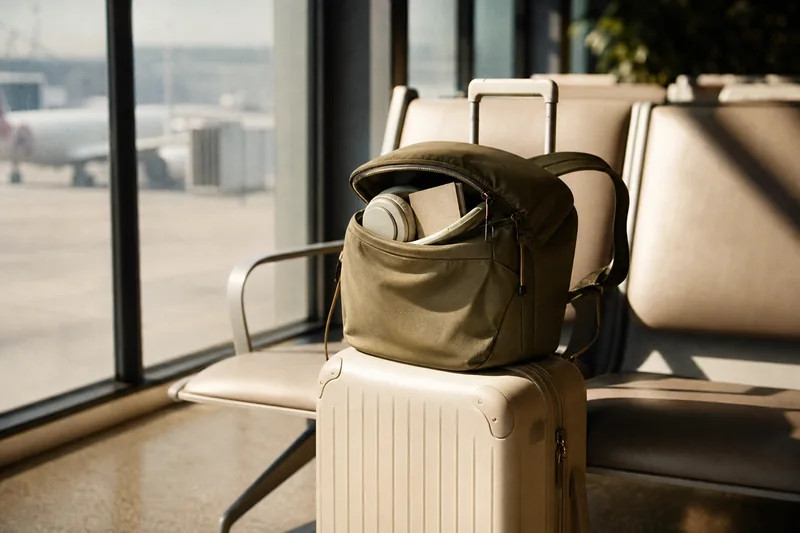
Sometimes a larger cabin bag has to travel in the aircraft hold. IATA’s guidance notes that this can happen when cabin stowage capacity is exceeded. It is worth planning for even when your bag fits the booked allowance.
The details of the handover, any charges and where you retrieve the bag depend on the airline and situation. Do not assume that another passenger’s experience on a different route establishes what will happen to yours.
Make an essentials group before leaving home
Choose the items you need to keep with you for the journey and the things that cannot travel in checked baggage. Keep them in a removable, accessible arrangement instead of burying them in several compartments.
Your list may include required travel documents, payment methods, keys, essential personal items and relevant electronics or batteries. The exact contents depend on your needs and the carrier’s rules. Do not create an extra separate bag without checking the permitted piece count and the airline’s instructions.
Remove spare lithium batteries and power banks
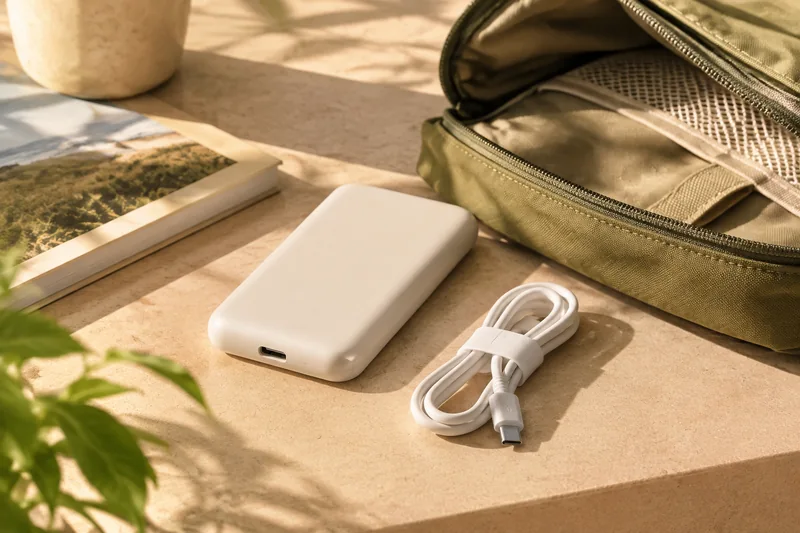
The FAA’s spare lithium battery guidance explicitly says that when a carry-on bag is checked at the gate or planeside, spare lithium batteries and power banks must be removed and kept with the passenger in the cabin.
Check your airline’s current requirements and tell staff about relevant items before handover. Smart luggage and other installed-battery arrangements can have their own conditions; do not assume that all battery-containing products are handled identically. Our power-bank guide explains the source checks for portable chargers.
Follow the actual handover process
Listen to the staff instructions about where to leave the bag and what documentation or tags you receive. Check the identifying information for obvious errors where it is available to you, and keep any receipt or reference in a secure accessible place.
Ask where the bag will be returned: at a particular collection point, on a baggage belt or elsewhere. Do not leave the arrival area assuming the process will match a previous trip. If a connection is involved, clarify what happens to the bag during that connection.
Keep necessary items with you
Avoid placing irreplaceable or essential things in a bag you may lose access to during travel. IATA advises against putting valuable or irreplaceable items in checked baggage. Plan essential medicine and equipment with the appropriate professional and airline rather than relying on a hurried decision at the gate.
This is also a useful time to check that loose belongings have not been left in an open seat pocket or on a bench while repacking. Close the bag and retain the items staff instructed you to remove.
If the bag does not arrive as expected
Follow the airline’s actual reporting process. IATA advises filing a missing-bag report in the baggage-reclaim area before leaving the airport when checked baggage is not delivered. Keep the relevant baggage reference and travel details available.
Do not infer compensation, automatic reimbursement or a delivery timetable from this guide. Those questions require the applicable carrier conditions and passenger-rights rules for the specific journey. The practical goal here is simpler: maintain access to essentials, handle restricted items correctly and know where your bag is supposed to reappear.