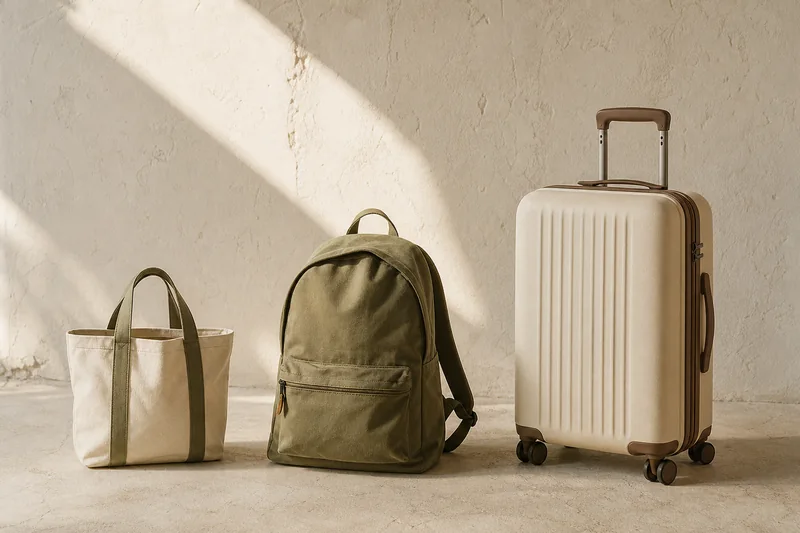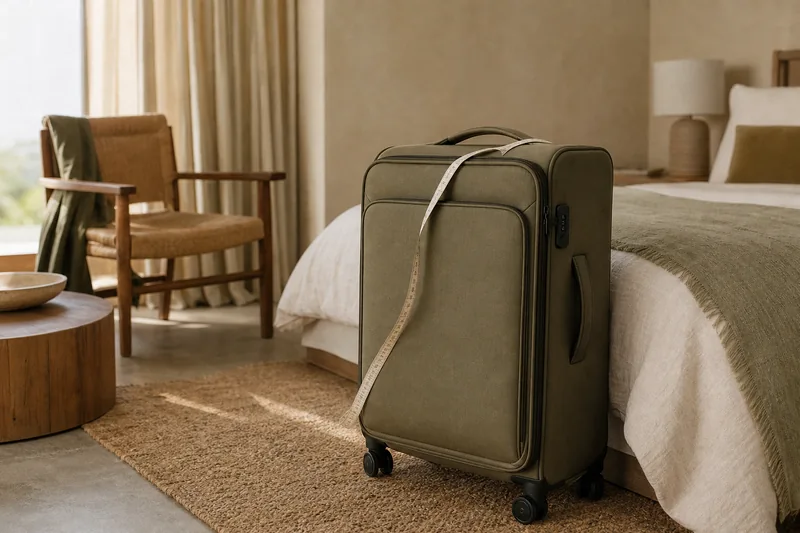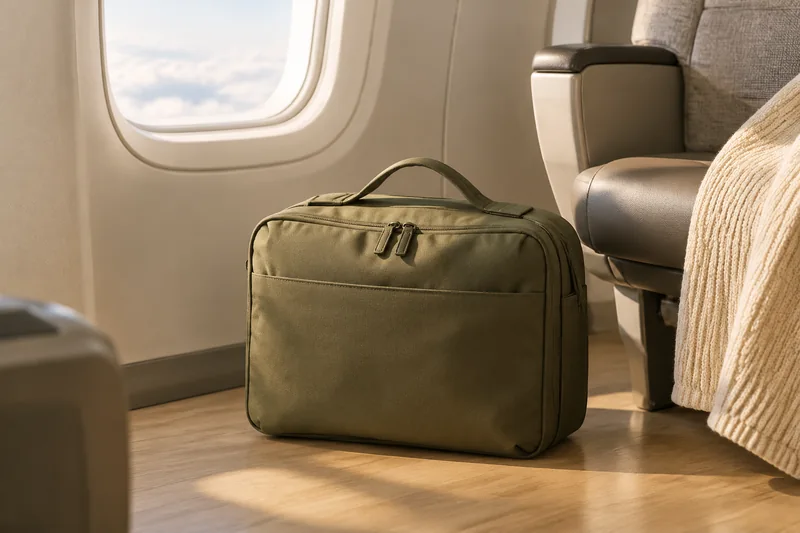
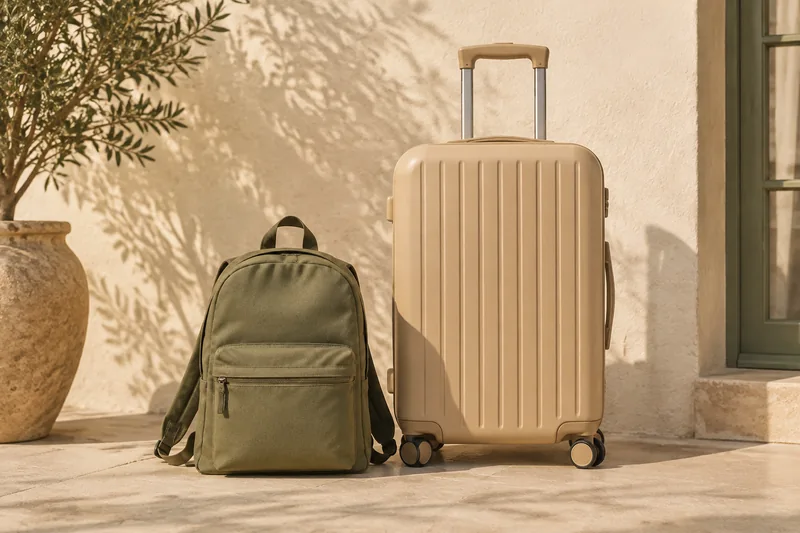
A personal item usually means a smaller bag intended for the space under the seat, while a larger cabin bag is commonly intended for an overhead compartment. The terminology is not consistent across airlines. “Carry-on”, “hand luggage”, “small cabin bag” and “personal item” can appear in different combinations.
The practical question is not which expression is correct. It is how many pieces your specific booking permits, how big each piece may be and where the airline says it must be stored.
Separate the name from the entitlement
A backpack is not automatically a personal item, and a suitcase is not automatically an included carry-on. Shape alone does not establish permission. An oversized tote can exceed a small-bag allowance just as easily as a wheeled case.
GOV.UK directs travellers to their airline for bag numbers and sizes. Read the actual baggage section of the booking rather than treating a product description, social-media post or another passenger’s experience as the policy.
A real example of the distinction
On the easyJet cabin-bag page checked on 3 November 2026, the airline describes one free small underseat cabin bag per person, with maximum dimensions of 45 × 36 × 20 cm, including handles and wheels. The same page describes a larger 56 × 45 × 25 cm cabin bag as a separate entitlement that can be booked or included through applicable fare or membership benefits.
That example explains the distinction; it is not a size chart for every airline. Read the airline’s current page and your own booking before buying a bag or paying for an extra piece. Avoid assuming that a similarly named fare on another carrier works the same way.
Compare the things that matter
| Question | Smaller underseat bag | Larger cabin bag |
|---|---|---|
| What must I check? | Piece count and small-bag dimensions | Whether the larger piece is included or added |
| Where is it normally intended to go? | Under the seat, subject to seating instructions | In an overhead compartment |
| What can change? | Airline, ticket conditions and seating restrictions | Airline, fare, aircraft and space availability |
| What should stay accessible? | Essential documents and journey items | Avoid burying those items here |
IATA explains that cabin allowances can vary by airline, cabin class and aircraft. It also notes seating situations where underseat storage is unavailable. Follow the crew’s stowage instructions rather than expecting every seat to have the same usable space.
Think about the number of separate pieces
A tote, laptop sleeve and handbag may each look small. That does not make them collectively one bag. Check how your airline treats additional articles and be prepared to place smaller items inside your permitted piece if required.
For a trip with a very small allowance, a bag that is comfortable when fully packed is usually more useful than one with impressive empty capacity. Test where a water bottle, jacket or laptop will go. External pockets can change the packed dimensions, so include them in your measurement.
Keep a gate plan
Even an entitled larger cabin bag may need to travel in the hold when cabin capacity is limited. Keep the items that cannot go into checked baggage, and essential personal items, in a removable accessible pouch. For batteries and power banks, consult the airline and relevant aviation authority before packing.
Before leaving home, write one line for each flight: permitted pieces, dimensions, weight if specified and whether an extra bag was purchased. That small record is more dependable than trying to remember what “carry-on included” meant when you booked.
Use the size-checking worksheet to compare a bag with an allowance you have verified, then read how to measure the packed bag.