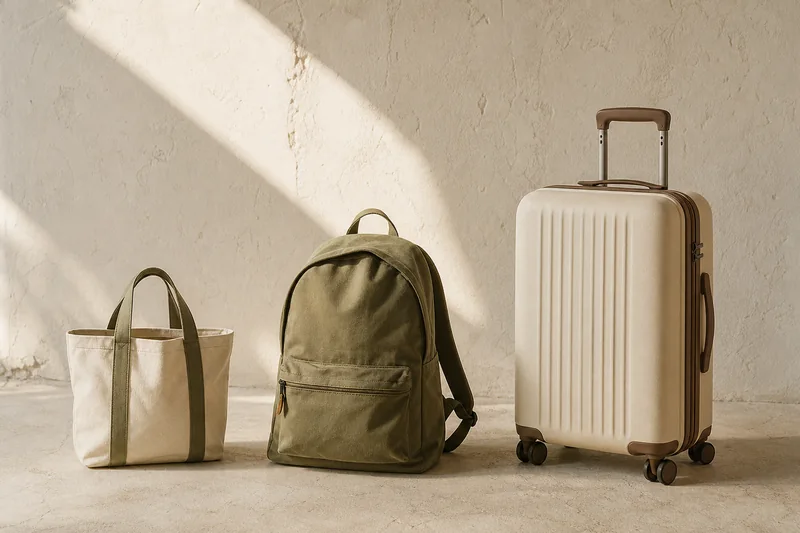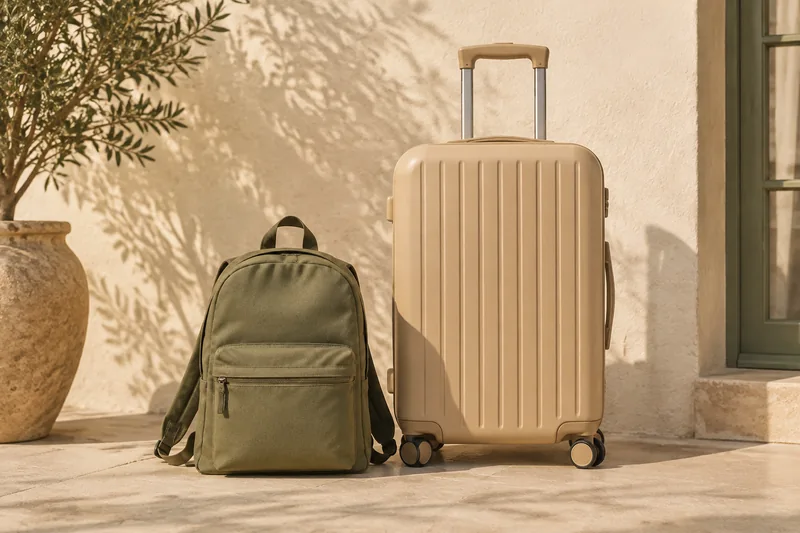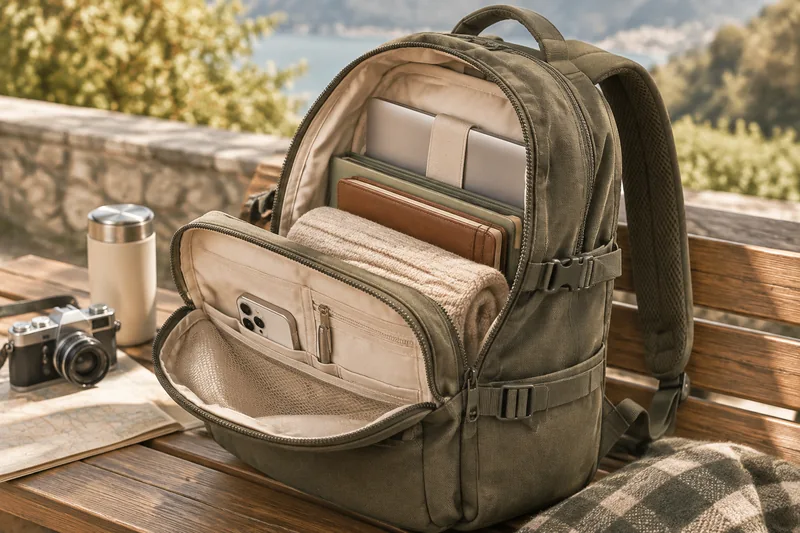
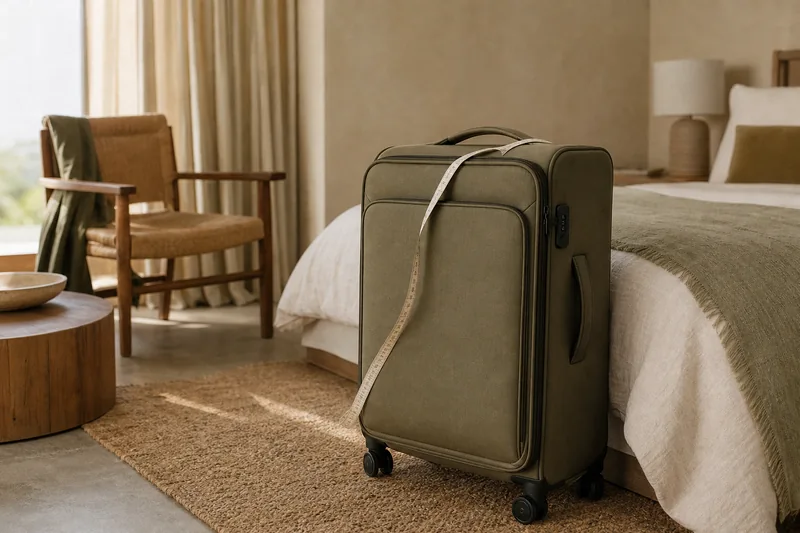
Measure a cabin bag when it is packed as you intend to carry it. An empty soft backpack may flatten comfortably and then gain several centimetres when filled. A suitcase’s main shell may fit an allowance while its wheels or top handle extend beyond it.
You need a tape measure, a reasonably flat surface and the dimensions from your actual airline booking. The method below is a practical way to check external size; it cannot guarantee an airline’s acceptance or replace a physical airport sizer.
Find the right allowance first
Look for the dimensions assigned to the specific piece you are taking. Do not compare a free underseat bag with the airline’s larger overhead allowance. Read whether handles and wheels are included and check for a separate weight limit.
IATA’s passenger baggage guidance treats allowances as airline-specific and includes wheels and handles in its general dimensional reference. easyJet’s current page explicitly includes them in both of its cabin-bag measurements. Use the wording of your own carrier for the final comparison.
Pack, close and settle the bag
Fill all the compartments you expect to use. Add the laptop, outer-pocket toiletries and anything clipped on the outside. Close the main zip without sitting on the bag or pulling it into an unusually compressed state.
Stand the bag in its normal orientation. Retract a telescopic handle, but include fixed grab handles and wheels. Smooth a loose strap out of the way only if that is how it will be stowed; a rigid buckle or permanently protruding pocket remains part of the external envelope.
Measure three outer dimensions
- Height: measure from the lowest wheel or base to the highest fixed part of the closed bag.
- Width: measure across the widest point, including bulging side pockets or handles.
- Depth: measure from the backmost surface to the fullest front pocket, not just the depth of the main compartment.
Keep the tape straight rather than following the curve of fabric. Holding a book or other straight edge at the furthest point can make a rounded bag easier to measure. Repeat the measurement after rotating it; a side handle is easy to overlook on the first pass.
Compare without optimistic rounding
Write the airline’s dimensions and your measurements using the same unit. If the airline gives centimetres, compare centimetres directly where possible. Do not round an oversized measurement down simply because the product page says “approved”.
| Check | Why it matters |
|---|---|
| Every external dimension fits | Overall volume alone does not establish fit |
| Packed pockets are included | Fabric expansion can change the result |
| Weight is checked separately | Dimensional fit does not prove weight compliance |
| Each flight is considered | A second carrier may use a different allowance |
Our bag-check tool lets you enter a verified allowance and your three measurements. Its result is a dimension comparison, not a prediction of enforcement or an official airline approval.
Check weight and real use
Weigh the complete packed bag on a suitable scale. Include the bag itself, organisers and attached accessories. If the airline has a combined-weight rule for more than one piece, follow that actual condition rather than weighing only the larger bag.
Finally, carry or roll the bag with the things you will be wearing. You should be able to manage the route and comply with the airline’s handling requirements. If the result is too big, removing contents or choosing another bag is more reliable than hoping a sizer will be forgiving. Recheck after adding a last-minute jacket, book or purchase.