
A work trip has a clear packing test: can you arrive with the documents, devices and clothes that let you do the job? The bag does not need to recreate your desk or provide a new outfit for every hour away. It needs a reliable working core and a realistic plan for everything around it.
Start with your employer’s travel, security and expenses policies. They may determine which equipment can travel, how it should be protected and what you can do on public networks. This guide is a packing framework rather than advice about handling confidential information.
Read the agenda as a packing brief
List the meetings, site visits, dinners and travel days. Note any dress code or required protective equipment and confirm uncertain requirements with the organiser. A factory visit and a casual conference may need very different things even if both last two days.
Build one complete outfit for the most demanding part of the agenda, then see which pieces can work again. A jacket that pairs with both trousers may be more useful than two almost identical options. Include an alternative if your role or personal comfort requires one; the aim is a considered list, not an arbitrary limit.
Prepare a working core
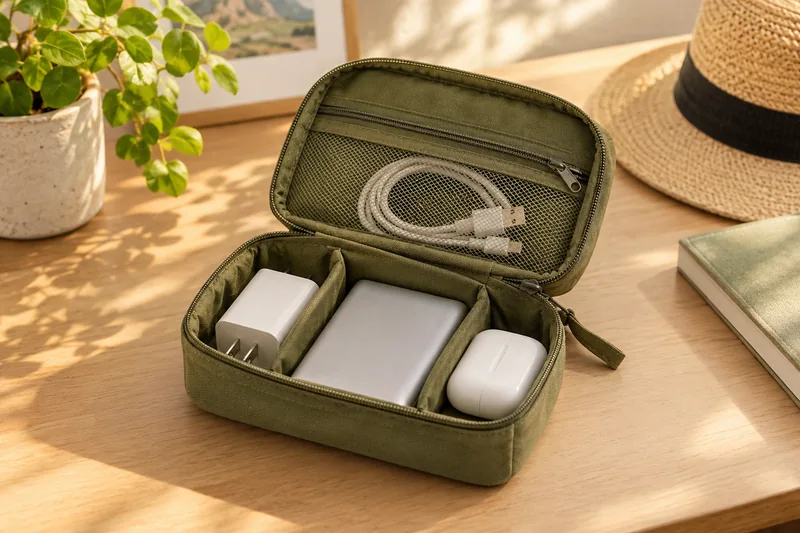
Set out the laptop if needed, its charger, the necessary cable and any meeting-specific adapter. Confirm the venue’s connection requirements rather than packing every cable you own. Charge equipment before departure and keep travel documents accessible offline where permitted by your organisation.
A power bank may be useful, but it needs its own checks. The FAA’s lithium battery guidance puts spare batteries and power banks in the cabin and describes capacity and protection requirements. Consult your airline too. A tech pouch is organisation, not proof that the contents are allowed.
Reduce clothing friction
Pack clothes clean and dry. Fold structured pieces with care and put small, soft items beside them rather than forcing an overfilled cube against a collar. Different fabrics respond differently to folding and rolling; use the method that suits the garment’s care instructions and shape.
On arrival, unpack the outfit you need first and check its condition while there is still time to solve a problem. If pressing or laundry matters to the trip, verify that the service is available and fits the schedule. Do not assume every room has an iron.
Keep arrival essentials reachable
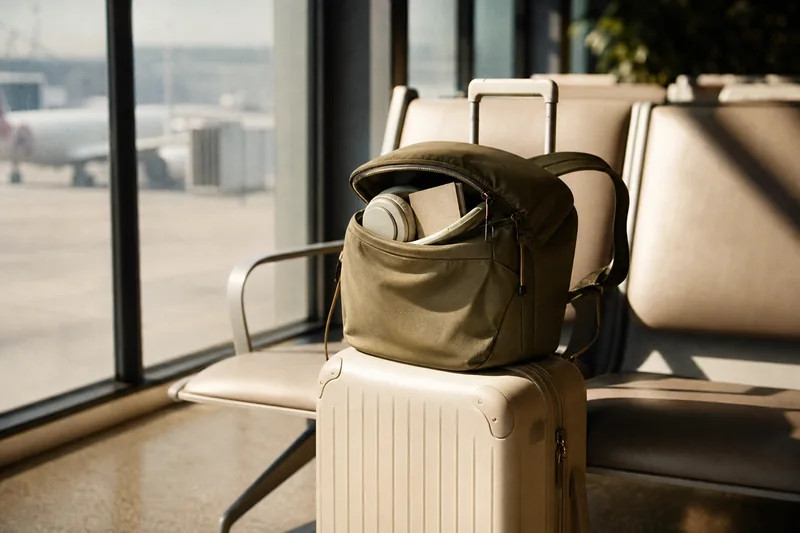
Put the first-day documents and necessary devices near an opening. Keep liquids accessible according to the departure airport’s procedure. If you have to work before checking in, decide where the overnight bag will go and whether you can comfortably carry it.
Valuables and irreplaceable items need particular attention if a cabin bag is taken at the gate. IATA advises against putting valuable or irreplaceable items in checked baggage. Prepare a small removable essentials group and follow your employer’s equipment rules.
Close the loop before leaving
Check the booking’s baggage entitlement, measure the loaded bag and weigh it when relevant. Confirm the meeting address, arrival contact and any site-entry documents through your actual organiser. None of these tasks is improved by squeezing another shirt into the side pocket.
Use the work-trip preset in the packing list and the tech-pouch guide to keep the bag focused on the work you are going to do.