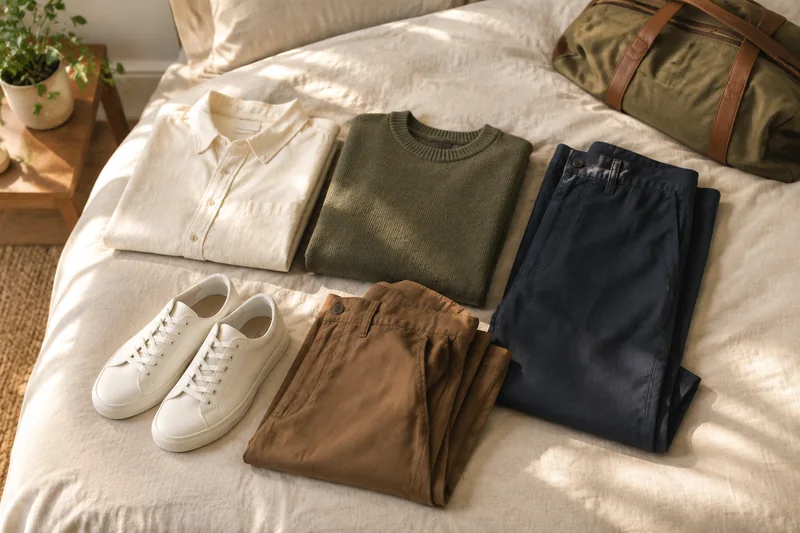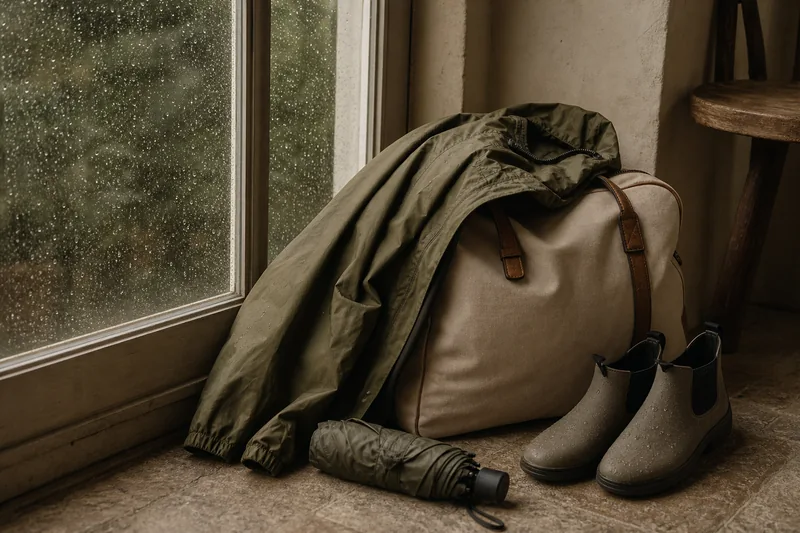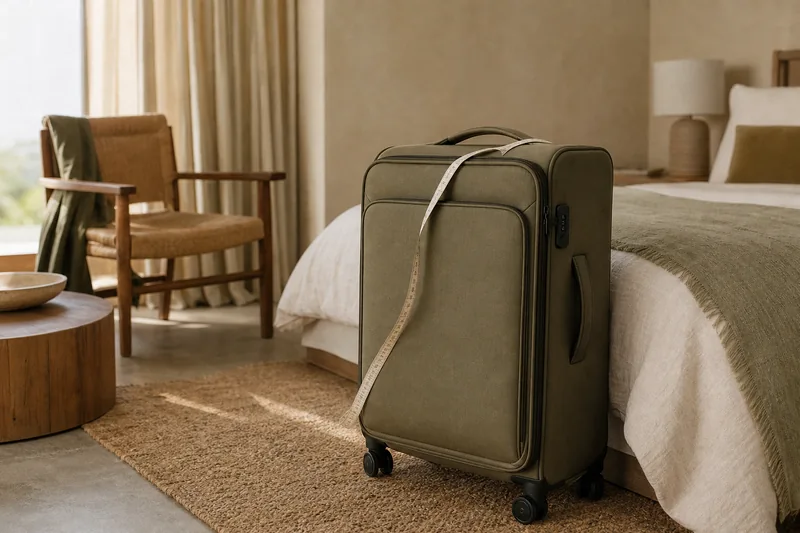
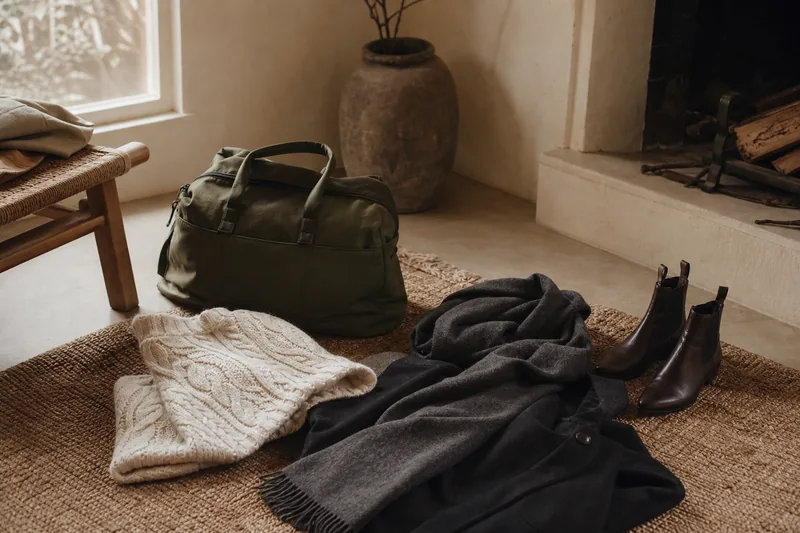
Cold-weather clothes change the packing equation. A second knit or pair of boots can take the space of several summer outfits. Begin with a coordinated system for the actual temperature and activity, then remove duplicated jobs before trying to squeeze everything tighter.
This plan concerns an ordinary winter weekend with access to indoor shelter. Snow sports, remote routes and severe cold require suitable equipment and specialist preparation. Do not use a small-bag goal as a reason to leave essential protection behind.
Check conditions across the whole day
Look at the forecast, likely time outdoors and transport between places. A trip spent moving between heated rooms is different from hours outside watching an event. Wind, rain and snow also affect what is useful; the temperature alone does not describe the day.
Write those conditions beside the itinerary. If the plan includes something you have not prepared for, change the equipment or the plan. Hope is not a substitute for appropriate clothing.
Start with the outer layer
Choose a coat or jacket suited to the expected conditions and try it with the layers you intend to wear underneath. Check movement, closures and the space around the shoulders. If you expect rain, make a specific plan for rain protection rather than assuming any winter coat handles it equally well.
You can wear the main coat during the journey if comfortable, but it still needs somewhere to go. Account for a warm terminal, a crowded train and airline instructions about cabin storage. Wearing an item does not remove the practical task of managing it.
Build a small layer rotation
For a short casual trip, one main midlayer and a spare may cover the plans, with suitable base clothing, underwear and sleepwear. Treat that as an example, not a promise of warmth or a universal quantity. Your comfort, conditions and ability to dry clothes determine the result.
Pick pieces that fit together. A bulky knit that cannot sit comfortably under your coat may be less useful than a combination you already wear successfully. Lay out each full outfit, including the outer layer, before packing.
Be selective about a second pair of shoes
Start with footwear appropriate to the surfaces and conditions. If you need a second pair for an indoor event, decide whether the event outfit can work with a smaller option. Do not replace necessary outdoor footwear merely to save space.
Keep shoes separate from clean fabric and pack them without crushing or damaging the rest of the contents. If the route is likely to leave them damp, make time and space for drying according to their care instructions.
Put small accessories where you can find them
Gloves, a hat and a scarf may be easy to lose inside a deep bag. Group what you need for arrival near the opening, especially if the first transfer takes you straight outdoors. Recheck pockets before leaving a café, train or hotel room.
Choose accessories for a purpose. Two nearly identical scarves do not necessarily solve more problems than one, while a spare item may matter if the first is likely to get wet. Decide from the itinerary rather than a fixed rule.
Measure after the final layer goes in
Winter clothing can expand a soft bag’s front and side pockets. Close the bag in its travel configuration, then measure the external dimensions and check any weight limit. GOV.UK advises checking cabin size and piece allowances with the airline.
If the result is too large, review duplicate bulky items first. You may need a different baggage arrangement. A manageable bag with the right contents is more useful than a tightly compressed bag that omits what the conditions require.
Use the bag checker for a dimensional comparison, and the capsule-wardrobe guide to make your layers work together.