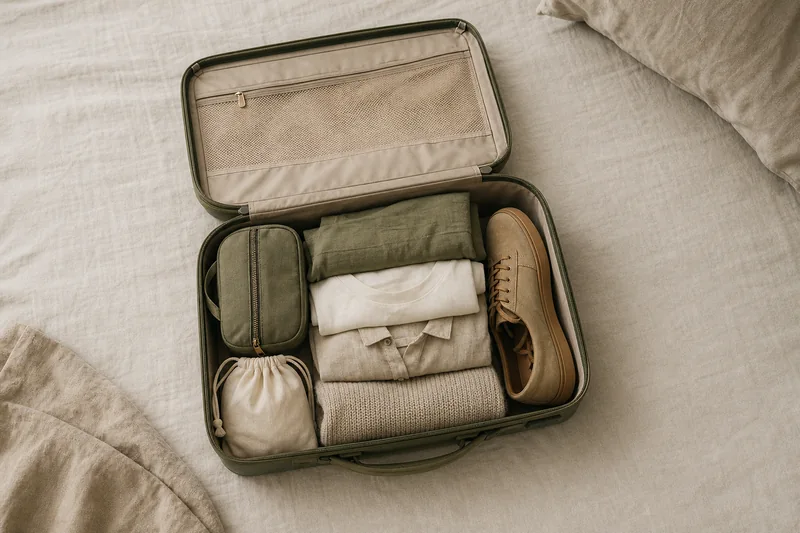
A travel capsule wardrobe is a small group of clothes that work together for the activities you have planned. It can be colourful, formal, casual or entirely familiar. Its value comes from useful combinations, not from copying somebody else’s beige flat lay.
Begin with clothes you already like wearing. A holiday is rarely the easiest place to discover that a new fabric is uncomfortable or that an ambitious outfit needs its own shoes, jacket and accessories.
Write the activities before the outfits
List the things you expect to do: a walking day, a work meeting, a relaxed dinner, a wet-weather transfer or an event with a stated dress requirement. Note the forecast and check conditions near departure rather than treating a destination’s general reputation as the weather for your dates.
Assign a comfortable outfit to each activity. Several activities may use the same pieces. Anything specialist, protective or required for access should be assessed on its real purpose; minimal packing does not mean leaving necessary equipment behind.
Find a small set of compatible pieces
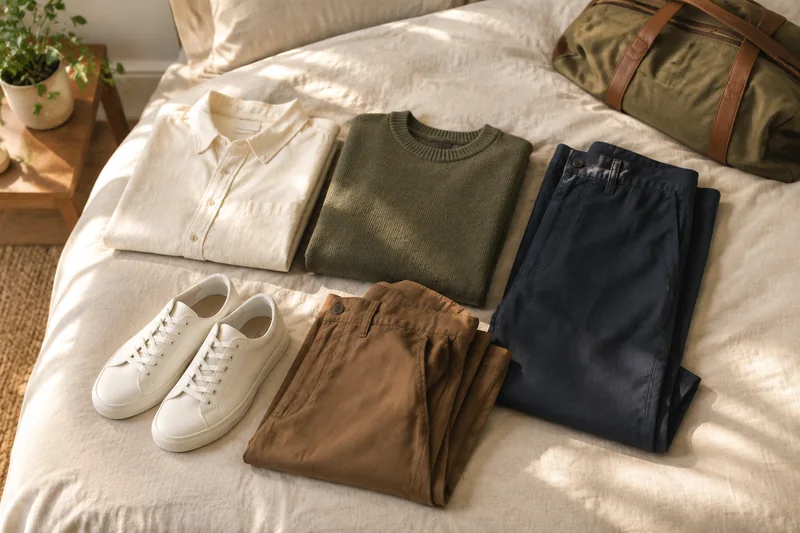
Pick a bottom you can wear with several tops, then build from there. Add a layer that works across more than one outfit. Colours can help compatibility, but comfort and appropriate coverage matter more than following a strict palette.
Try each intended combination on. A top that technically matches may not fit comfortably beneath the jacket you chose. Taking a quick personal reference photo can help you remember combinations without packing an extra complete outfit for each day.
Use quantities as an example, not a rule
For a casual short break, one possible starting point is a small group of tops, a spare bottom, underwear for your needs, sleepwear and an outer layer. A longer trip with reliable laundry access may use a similar clothing range with a planned washing point.
The right amount changes with climate, personal needs, fabric drying time and the activities. There is no universal capsule count that overrides those conditions. Do not assume you will wash an item if there is no convenient place or enough time to dry it.
| Ask of each garment | Keep it when… |
|---|---|
| Which activity needs it? | It serves a real plan or a sensible weather need |
| What does it work with? | It fits the combinations you will actually wear |
| How is it cared for? | The care method is practical on the itinerary |
| Is another item doing the same job? | The overlap is intentional rather than accidental |
Let shoes decide some boundaries
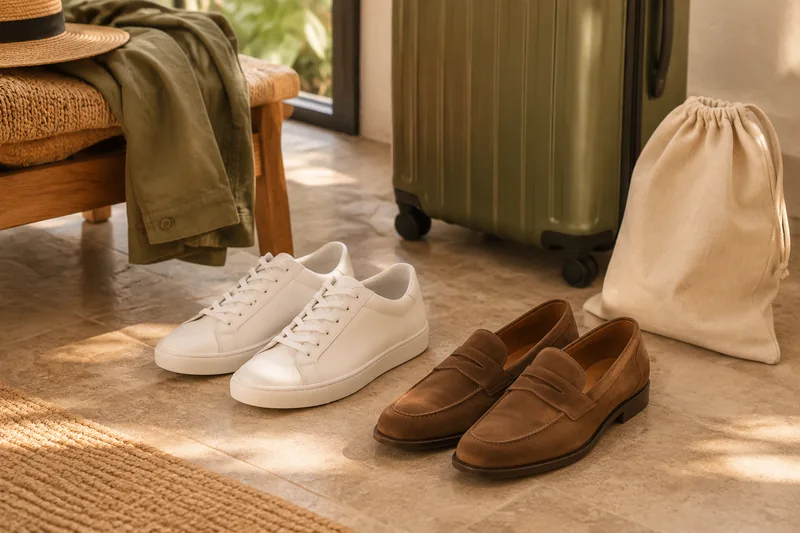
A pair of shoes can change several outfits at once. Start with something suitable for the walking or work you have planned, then check whether a second pair serves a distinct purpose. Do not take uncomfortable shoes merely because they are smaller.
Wear and test the footwear before departure. If your activities need different equipment, acknowledge that in the bag plan. Read packing shoes without overpacking for a more detailed decision process.
Plan the used-clothing stage
Leave a place for laundry, choose an actual washing opportunity and check care labels. Your capsule should work after some pieces have been worn, not only when every item is clean and arranged on the bed.
OneBag offers broader packing-list thinking; our method here is a practical editorial framework, not a claim that a certain number of garments is scientifically optimal. After the trip, note which combinations you wore. Replace the imagined wardrobe with that real record and the next capsule will become easier to choose.