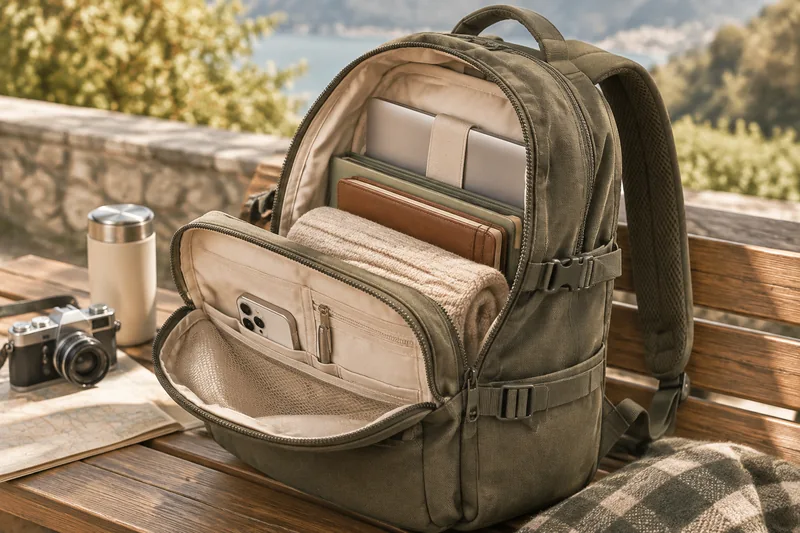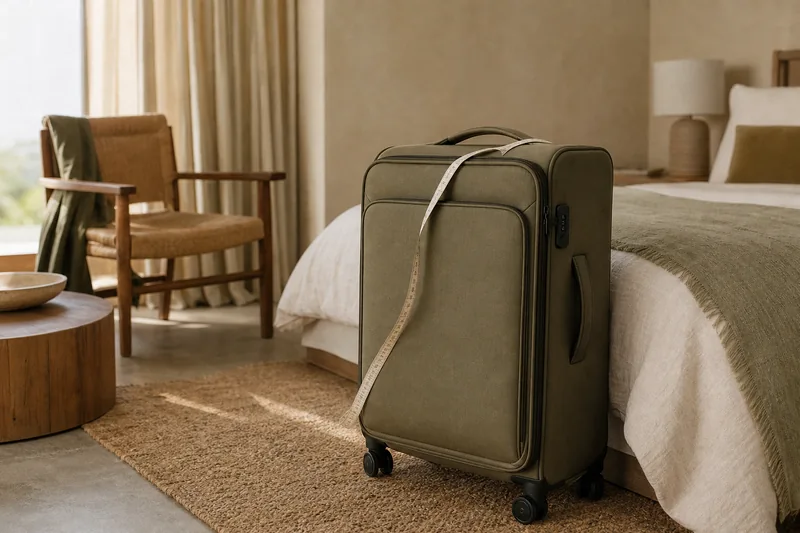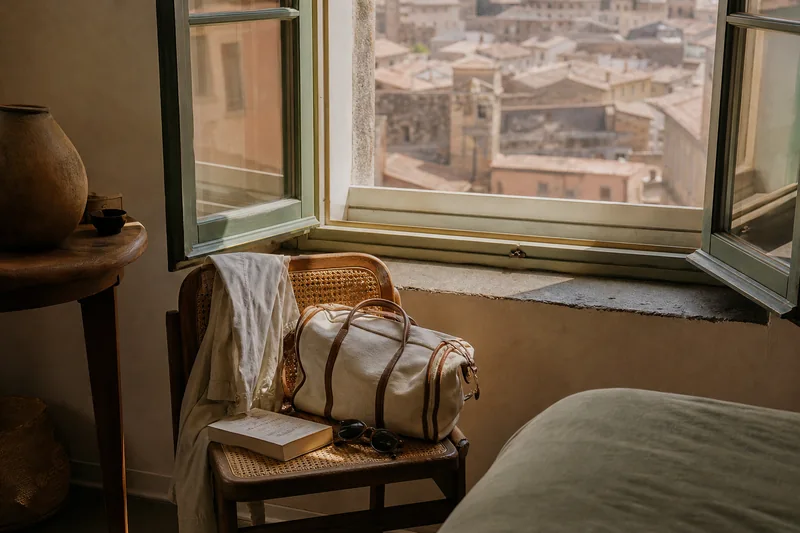
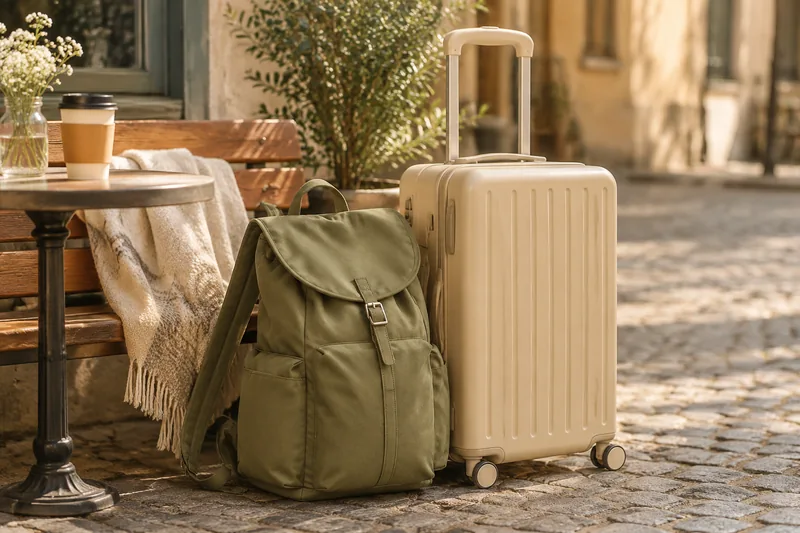
A backpack keeps your hands free. A wheeled suitcase moves much of its load onto the ground. Neither is the correct answer for every traveller, and neither automatically means you are packing lightly.
Start by picturing the complete route: the walk to the station, the airport, the transfer, the accommodation entrance and the trip back. The awkward ten minutes on that route may matter more than an hour on a smooth terminal floor.
Where a backpack can help
A backpack can be convenient when a route includes stairs, uneven surfaces or frequent changes between transport. You can keep both hands available for tickets or a handrail, provided the bag fits comfortably and does not obstruct other people.
The limitation is that you carry its weight. Try the actual loaded bag, not just the empty one. Check how the straps feel, whether the back panel suits you and whether you can put it on and take it off comfortably. A large-capacity travel backpack can encourage overpacking just as easily as a large suitcase.
These are practical considerations, not medical advice. If carrying a backpack is uncomfortable or unsuitable for you, wheels, assistance or another arrangement may be the more useful choice. There is no one-bag achievement worth making the journey unnecessarily difficult.
Where a suitcase can help
A wheeled case can work well for smooth stations, terminal floors and short transfers to accommodation with suitable access. Its structure may make it easier to organise folded clothes and protect a tidy packing layout.
You still need to lift it at some points. Check that you can handle the packed case, including any overhead-stowage expectations that apply to your trip. Small wheels, stairs, gravel and crowded pavements can turn a simple roll into repeated carrying. Look at your itinerary rather than assuming “city break” means smooth surfaces throughout.
Compare the trade-offs
| Consideration | Backpack | Wheeled suitcase |
|---|---|---|
| Moving over uneven ground | Does not depend on wheels | May need to be carried |
| Carrying the load | Usually on your body | Often on the floor, with lifting still required |
| Organisation | Depends strongly on opening and compartments | Clamshell shapes can make contents easy to see |
| Access on the move | External pockets can be useful | Access may require opening the case |
| Airline allowance | Must be checked when packed | Must include wheels and handles |
Consider an accessible everyday pocket in either design. If retrieving your documents means opening the entire luggage compartment, that inconvenience repeats at every transfer.
Try a realistic packing test
Use the same list to fill both bags if you have the option. Walk with each, turn in a narrow space, lift it onto a bench and try taking out the item you need most often. A bag that looks smaller in a product photograph might be less manageable once loaded.
Do not buy extra equipment to force your contents to suit a preferred aesthetic. If a structured bag solves your organisation needs without six additional pouches, that may be the simpler setup. If a lightweight backpack carries your existing kit comfortably, it may be enough already.
Check the airline independently
Your choice of shape does not settle the baggage rules. GOV.UK advises checking size and bag numbers with the airline. Measure the exterior, include full pockets and compare the actual entitlement for each flight.
Then choose the bag you would be happiest to handle at the least convenient point of the journey. Packing light is about making travel easier for you, not conforming to one particular style of luggage.